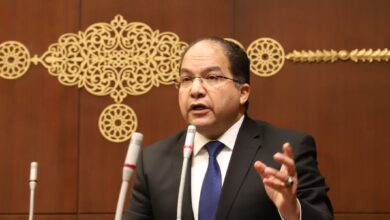

Engineer Ahmed El Sebai, General Manager of the Egy Swiss Group for Pasta, Milling, and Concentrates, said that close collaboration between the government, the private sector, and the banking system is a cornerstone for achieving the state’s objectives of expanding and maximizing food exports. He stressed that Africa represents the greatest opportunity for Egyptian products in the coming phase.
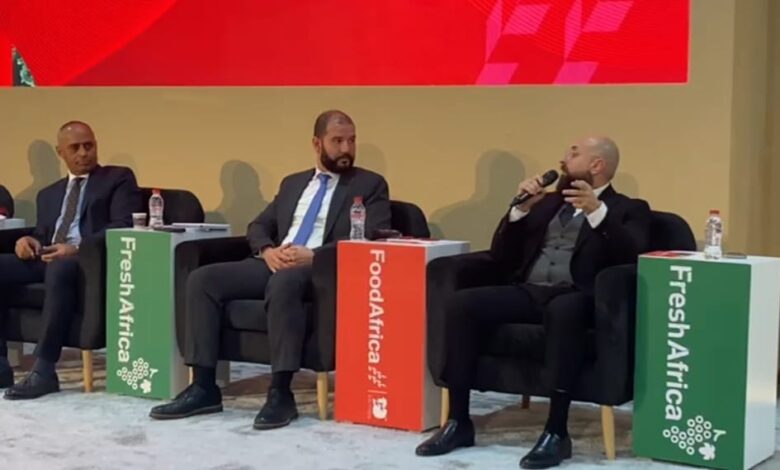
El Sebai made the remarks during his participation in a panel discussion titled “Africa’s Shared Table: Unlocking Intra-African Trade in Food and Agriculture,” held on the third day of the 10th edition of Food Africa 2025. The event, organized by Concept, drew strong attendance from business leaders, experts, and specialists in food industries and agricultural commodities.
The session featured Ahmed El Fandy, CEO of Sima Food Industries; Trade Minister Plenipotentiary Essam El-Naggar, Chairman of the Egyptian General Organization for Exhibitions and Conferences; and Suleiman El-Ashqar, Assistant Vice President for Africa at Commercial International Bank (CIB). The discussion was moderated by Rana Gamali, Vice Chair of the Food Industries Chamber and Director of Corporate Affairs and Sustainability at Coca-Cola Egypt.
El Sebai said Egypt is seeking to expand aggressively across the African continent and capture a larger share of food exports to African markets. He noted that Food Africa has played a pivotal role in connecting Egyptian companies with major African importers and opening new export channels over recent years.
He explained that the group initially focused on expanding into East African markets, followed by West Africa, before extending its export plans to non-traditional markets such as the United States. He emphasized that flexibility in export strategy was a decisive factor behind this expansion.
El Sebai also underscored the importance of Egyptian banks’ presence in Africa, pointing out that CIB’s operations in Kenya help facilitate trade flows and export financing, supporting Egyptian companies’ expansion across the continent.
He highlighted the positive role of trade agreements, particularly COMESA, which has contributed to the growth of Egyptian exports to East African countries through tariff exemptions.
Addressing the African Continental Free Trade Area (AfCFTA), El Sebai said it represents a major opportunity to increase exports, even though only a limited number of countries—such as South Africa and Ghana—have begun implementing it so far. He expects its positive impact to be reflected in Egyptian factories in the period ahead.
The group’s general manager also emphasized the importance of promoting the “Made in Egypt” brand in external markets, noting that Egyptian products are highly competitive in terms of quality and price but sometimes lack organized promotional tools. He proposed launching a targeted promotional campaign in five African countries as an initial phase to introduce Egyptian products and strengthen their market presence.
He further stressed the need to expand trade with Africa by increasing reliance on sourcing raw materials available on the continent—such as pineapple, coffee, tea, fish, crustaceans, and sesame—thereby achieving industrial integration and enhancing value added for Egypt’s food industries.
In closing, El Sebai called for a focus on execution quality and the number of companies benefiting from export initiatives, rather than merely the scale of participation in exhibitions. He said this approach would help build sustainable strategic partnerships and strengthen Egyptian exporters’ ability to penetrate African markets more efficiently, supported by a strong financial infrastructure and innovative financing tools that reduce reliance on the US dollar and encourage transactions in local currencies.